Hiscox filed changes to its Wisconsin Businessowners Program that would produce an overall rate impact of 10.3% across 531 policyholders, representing about $574,587 in written premium. The filing shows a 20.2% indicated change and an estimated written premium increase of $59,276, with new business effective April 20, 2026 and renewals effective August 18, 2026.
The filing is largely a property story. Hiscox says the overall Wisconsin impact is made up of a 15% increase for property coverage and no overall change for liability coverage. Building and business personal property base rates are being raised by 13% across the schedule, while liability pricing is being reshaped rather than broadly increased.
That reshaping is one of the more notable parts of the filing. In practice, that means smaller and mid sized accounts see modest changes while larger accounts get meaningful decreases. For premises and operations liability, the proposed change ranges from a 4% decrease at $50,000 in revenue to cuts of 26.5% at $10 million and above. The same pattern applies to products and completed operations.
The company’s revenue curve justification shows why. Risks in the $800,000 to $1.5 million band had a loss ratio relativity of 0.54, leading to a proposed 10.3% reduction. Risks in the $1.5 million to $3 million band showed a relativity of 0.57 and a proposed 17% reduction. The largest band, $3 million to $50 million, had a relativity of 0.23 and a proposed 23.5% reduction. That suggests Hiscox views larger revenue accounts as materially overpaying relative to their observed liability loss experience.

Liability support is thinner in Wisconsin, which is another important detail. The state liability indication came out to negative 1.2%, but that result is based on very limited local credibility, with just a small amount of Wisconsin premium and almost no recorded loss activity in the exhibit period. Hiscox says it supplemented its businessowners liability data with its much larger ISO general liability program, which it considered more credible for selecting frequency and severity trends as well as development factors.
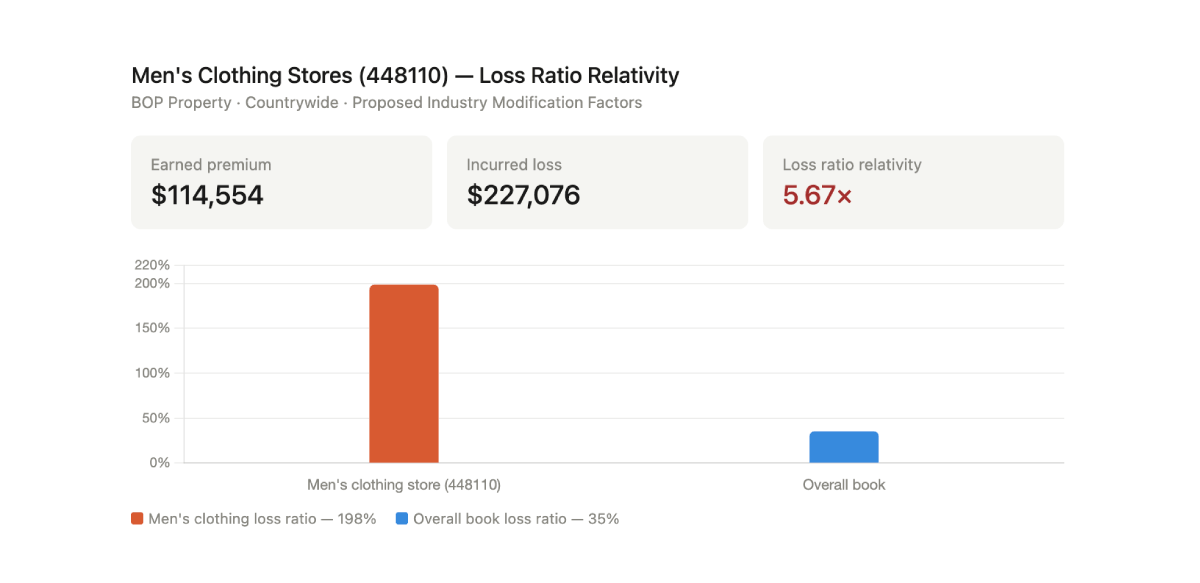
The filing also includes revisions to industry modification factors, offering a view into which classes Hiscox sees as underpriced. Among the segments receiving higher factors are offices of miscellaneous health practitioners and other personal services, both moving to 40%, as well as several retail classes such as furniture stores, beauty supply stores, and multiple clothing related categories moving to 20% or 30%. Miscellaneous schools and instruction and general merchandise stores were also pushed up, though to a lesser degree.
Premium, Loss & Relativity by Industry

 Another notable change is the addition of a broad schedule rating plan and the removal of the transition rule. The new plan allows aggregate credits or debits of up to 50% based on factors including management, location, building features, employees, protection, financial condition, contracts, safety organization, and classification characteristics. It also adds some less traditional factors such as public reviews and the reputability of a partnership or referral group, giving Hiscox more room for underwriting judgment outside the base rate structure.
For competitors, the filing suggests Hiscox is trying to do two things at once in Wisconsin small commercial. First, it is pushing property pricing up to respond to trend and mix deterioration. Second, it is making liability pricing more competitive for larger revenue accounts, where its own data suggests current relativities were too steep.